Showing posts with label Hindu. Show all posts

Monday

Quote on Indian mysticism

Image Credit: Mystique Earth
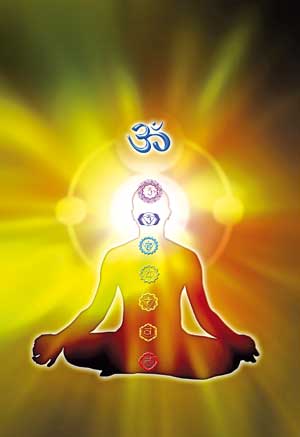
Indian mysticism, and Hinduism in particular, clothes its statements in the form of myths, using metaphors and symbols, poetic images, similes and allegories. Mythical language is much less restricted by logic and common sense. It is full of magic and of paradoxical situations, rich in suggestive images and never precise, and can thus convey the way in which mystics experience reality much better than factual language. According to Ananda Coomaraswamy, ‘myth embodies the nearest approach to absolute truth that can be stated in words.'
The rich Indian imagination has created a vast number of gods and goddesses whose incarnations and exploits are the subjects of fantastic tales, collected in epics of huge dimensions. The Hindu with deep insight knows that all these gods are creations of the mind, mythical images representing the many faces of reality. On the other hand, he also knows that they were not merely created to make the stories more attractive, but are essential vehicles to convey the doctrines of a philosophy rooted in mystical experience.

~ Fritjof Capra

Quote on Indian mysticism

Image Credit: Mystique Earth
Indian mysticism, and Hinduism in particular, clothes its statements in the form of myths, using metaphors and symbols, poetic images, similes and allegories. Mythical language is much less restricted by logic and common sense. It is full of magic and of paradoxical situations, rich in suggestive images and never precise, and can thus convey the way in which mystics experience reality much better than factual language. According to Ananda Coomaraswamy, ‘myth embodies the nearest approach to absolute truth that can be stated in words.'
The rich Indian imagination has created a vast number of gods and goddesses whose incarnations and exploits are the subjects of fantastic tales, collected in epics of huge dimensions. The Hindu with deep insight knows that all these gods are creations of the mind, mythical images representing the many faces of reality. On the other hand, he also knows that they were not merely created to make the stories more attractive, but are essential vehicles to convey the doctrines of a philosophy rooted in mystical experience.

~ Fritjof Capra

Friday

Quote on different perspectives on illness


Image: Phaitoon / FreeDigitalPhotos.net
1. Christian—The fundamentalist message: Illness is basically a punishment from God for some sort of sin. The worse the illness, the more unspeakable the sin.

2. New Age—Illness is a lesson. You are giving yourself this disease because there is something important you have to learn from it in order to continue your spiritual growth and evolution. Mind alone causes illness and mind alone can cure it. A yuppified post-modern version of Christian Science.

3. Medical—Illness is fundamentally a biophysical disorder, caused by biophysical factors (from viruses to trauma to genetic predisposition to triggering agent). You needn't worry about psychological or spiritual treatment for most illnesses because such alternative treatments are usually ineffectual and may actually prevent you from getting the proper medical attention.

4. Karma—Illness is the result of negative karma; that is, some non-virtuous past actions are now coming to fruition in the form of a disease. The disease is "bad" in the sense that it represents past nonvirtue; but "good" in the sense that the disease process itself represents the burning up and the purifying of the past misdeed; it's a purgation, a cleansing.

5. Psychological—As Woody Allen put it, "I don't get angry, I grow tumors instead." The idea is that, at least in pop psychology, repressed emotions cause illness. The extreme form: illness is a death wish.

6. Gnostic—Illness is an illusion. The entire manifest universe is a dream, a shadow, and one is free of illness only when one is free from illusory manifestation altogether, only when one awakens from the dream and discovers instead the one reality beyond the manifest universe. Spirit is the only reality, and in Spirit there is no illness. An extreme and somewhat off-centered version of mysticism.

7. Existential—Illness itself is without meaning. Accordingly, it can take any meaning I choose to give it, and I am solely responsible for these choices. Men and women are finite and mortal, and the authentic response is to accept illness as part of one's finitude even while imbuing it with personal meaning.

8. Holistic—Illness is a product of physical, emotional, mental, and spiritual factors, none of which can be isolated from the others, none of which can be ignored. Treatment must involve all of these dimensions (although in practice this often translates into an eschewal of orthodox treatments, even when they might help).

9. Magical—Illness is retribution. "I deserve this because I wished So-and-so would die" Or, "I better not excel too much, something bad will happen to me." And so on.

10. Buddhist—Illness is an inescapable part of the manifest world; asking why there illness is like asking why there is air. Birth, old age, sickness, and death-- these are the marks of this world, all of whose phenomena are characterized by impermanence, suffering, and selflessness. Only enlightenment, in the pure awareness of nirvana, is illness finally transcended, because then the entire phenomenal world is transcended as well.

11. Scientific—Whatever the illness is, it has a specific cause or cluster of causes. Some of these causes are determined, others are simply random or due to pure chance. Either way, there is no "meaning " to illness, there is only chance or necessity.

~ Ken Wilber
Quote on different perspectives on illness


Image: Phaitoon / FreeDigitalPhotos.net
1. Christian—The fundamentalist message: Illness is basically a punishment from God for some sort of sin. The worse the illness, the more unspeakable the sin.

2. New Age—Illness is a lesson. You are giving yourself this disease because there is something important you have to learn from it in order to continue your spiritual growth and evolution. Mind alone causes illness and mind alone can cure it. A yuppified post-modern version of Christian Science.

3. Medical—Illness is fundamentally a biophysical disorder, caused by biophysical factors (from viruses to trauma to genetic predisposition to triggering agent). You needn't worry about psychological or spiritual treatment for most illnesses because such alternative treatments are usually ineffectual and may actually prevent you from getting the proper medical attention.

4. Karma—Illness is the result of negative karma; that is, some non-virtuous past actions are now coming to fruition in the form of a disease. The disease is "bad" in the sense that it represents past nonvirtue; but "good" in the sense that the disease process itself represents the burning up and the purifying of the past misdeed; it's a purgation, a cleansing.

5. Psychological—As Woody Allen put it, "I don't get angry, I grow tumors instead." The idea is that, at least in pop psychology, repressed emotions cause illness. The extreme form: illness is a death wish.

6. Gnostic—Illness is an illusion. The entire manifest universe is a dream, a shadow, and one is free of illness only when one is free from illusory manifestation altogether, only when one awakens from the dream and discovers instead the one reality beyond the manifest universe. Spirit is the only reality, and in Spirit there is no illness. An extreme and somewhat off-centered version of mysticism.

7. Existential—Illness itself is without meaning. Accordingly, it can take any meaning I choose to give it, and I am solely responsible for these choices. Men and women are finite and mortal, and the authentic response is to accept illness as part of one's finitude even while imbuing it with personal meaning.

8. Holistic—Illness is a product of physical, emotional, mental, and spiritual factors, none of which can be isolated from the others, none of which can be ignored. Treatment must involve all of these dimensions (although in practice this often translates into an eschewal of orthodox treatments, even when they might help).

9. Magical—Illness is retribution. "I deserve this because I wished So-and-so would die" Or, "I better not excel too much, something bad will happen to me." And so on.

10. Buddhist—Illness is an inescapable part of the manifest world; asking why there illness is like asking why there is air. Birth, old age, sickness, and death-- these are the marks of this world, all of whose phenomena are characterized by impermanence, suffering, and selflessness. Only enlightenment, in the pure awareness of nirvana, is illness finally transcended, because then the entire phenomenal world is transcended as well.

11. Scientific—Whatever the illness is, it has a specific cause or cluster of causes. Some of these causes are determined, others are simply random or due to pure chance. Either way, there is no "meaning " to illness, there is only chance or necessity.

~ Ken Wilber

Tuesday

Quote on religions

Credit: Boloji.com
I came to the conclusion long ago … that all religions were true and also that all had some error in them, and whilst I hold by my own, I should hold others as dear as Hinduism. So we can only pray, if we are Hindus, not that a Christian should become a Hindu … But our innermost prayer should be a Hindu should be a better Hindu, a Muslim a better Muslim, a Christian a better Christian.

~ Mohandas Karamchand Gandhi

Quote on religions

Credit: Boloji.com
I came to the conclusion long ago … that all religions were true and also that all had some error in them, and whilst I hold by my own, I should hold others as dear as Hinduism. So we can only pray, if we are Hindus, not that a Christian should become a Hindu … But our innermost prayer should be a Hindu should be a better Hindu, a Muslim a better Muslim, a Christian a better Christian.

~ Mohandas Karamchand Gandhi