Showing posts with label Story. Show all posts

Thursday

Poem: The Confession of An Apricot

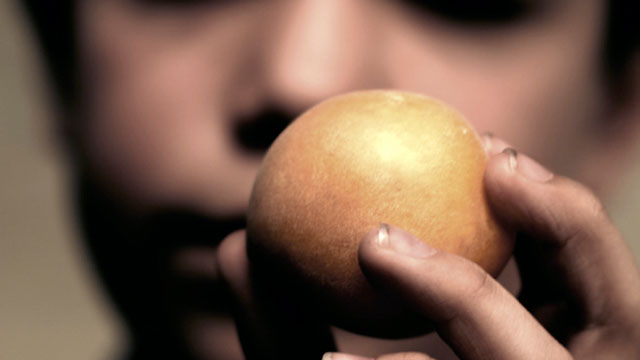
Apricot by Ben Briand
I love incorrectly.

There is a solemnity in hands,
the way a palm will curve
in accordance with a contour of skin,
the way it will release a story.

This should be a pilgrimage.
The touching of a source.
This is what sanctifies.

This pleading. This mercy.
I want to be a pilgrim to everyone,
close to the inaccuracies, the astringent
dislikes, the wayward peace, the private
words. I want to be close to the telling.
I want to feel everyone whisper.

After the blossoming I hang.
The encyclical that has come
through the branches
instructs us to root, to become
the design encapsulated within.

Flesh helping stone turn tree.

I do not want to hold life
at my extremities, see it prepare
itself for my own perpetuation.
I want to touch and be touched
by things similar in the world.

I want to know a few secular days
of perfection. Late in this one great season
the diffused morning light
hides the horizon of sea. Everything
the color of slate, a soft tablet
to press a philosophy to.

~ Carl Adamshick

Poem: The Confession of An Apricot

Apricot by Ben Briand
I love incorrectly.

There is a solemnity in hands,
the way a palm will curve
in accordance with a contour of skin,
the way it will release a story.

This should be a pilgrimage.
The touching of a source.
This is what sanctifies.

This pleading. This mercy.
I want to be a pilgrim to everyone,
close to the inaccuracies, the astringent
dislikes, the wayward peace, the private
words. I want to be close to the telling.
I want to feel everyone whisper.

After the blossoming I hang.
The encyclical that has come
through the branches
instructs us to root, to become
the design encapsulated within.

Flesh helping stone turn tree.

I do not want to hold life
at my extremities, see it prepare
itself for my own perpetuation.
I want to touch and be touched
by things similar in the world.

I want to know a few secular days
of perfection. Late in this one great season
the diffused morning light
hides the horizon of sea. Everything
the color of slate, a soft tablet
to press a philosophy to.

~ Carl Adamshick

Tuesday

A Story About the Body

Source: Big whoop
The young composer, working that summer at an artist's colony, had
watched her for a week. She was Japanese, a painter, almost sixty, and
he thought he was in love with her. He loved her work, and her work was
like the way she moved her body, used her hands, looked at him directly
when she made amused or considered answers to his questions. One
night, walking back from a concert, they came to her door and she
turned to him and said, "I think you would like to have me. I would like
that too, but I must tell you I have had a double mastectomy," and
when he didn't understand, "I've lost both my breasts." The radiance
that he had carried around in his belly and chest cavity--like music--
withered, very quickly, and he made himself look at her when he said,
"I'm sorry. I don't think I could." He walked back to his own cabin
through the pines, and in the morning he found a small blue bowl on the
porch outside his door. It looked to be full of rose petals, but he found
when he picked it up that the rose petals were on top; the rest of the
bowl--she must have swept them from the corners of her studio--was
full of dead bees.

~ Robert Hass

A Story About the Body

Source: Big whoop
The young composer, working that summer at an artist's colony, had
watched her for a week. She was Japanese, a painter, almost sixty, and
he thought he was in love with her. He loved her work, and her work was
like the way she moved her body, used her hands, looked at him directly
when she made amused or considered answers to his questions. One
night, walking back from a concert, they came to her door and she
turned to him and said, "I think you would like to have me. I would like
that too, but I must tell you I have had a double mastectomy," and
when he didn't understand, "I've lost both my breasts." The radiance
that he had carried around in his belly and chest cavity--like music--
withered, very quickly, and he made himself look at her when he said,
"I'm sorry. I don't think I could." He walked back to his own cabin
through the pines, and in the morning he found a small blue bowl on the
porch outside his door. It looked to be full of rose petals, but he found
when he picked it up that the rose petals were on top; the rest of the
bowl--she must have swept them from the corners of her studio--was
full of dead bees.

~ Robert Hass

The Enigma We Answer by Living

Source: peaceloveskinnyjeans.tumblr.com/Favim.com
Einstein didn't speak as a child
waiting till a sentence formed and
emerged full-blown from his head.

I do the thing, he later wrote, which
nature drives me to do. Does a fish
know the water in which he swims?

This came up in conversation
with a man I met by chance,
friend of a friend of a friend,

who passed through town carrying
three specimen boxes of insects
he'd collected in the Grand Canyon—

one for mosquitoes, one for honeybees,
one for butterflies and skippers,
each lined up in a row, pinned and labeled,

tiny morphologic differences
revealing how adaptation
happened over time. The deeper down

he hiked, the older the rock
and the younger
the strategy for living in that place.

And in my dining room the universe
found its way into this man
bent on cataloguing each innovation,

though he knows it will all disappear—
the labels, the skippers, the canyon.
We agreed then, the old friends and the new,

that it's wrong to think people are a thing apart
from the whole, as if we'd sprung
from an idea out in space, rather than emerging

from the sequenced larval mess of creation
that binds us with the others,
all playing the endgame of a beautiful planet

that's made us want to name
each thing and try to tell
its story against the vanishing.

~ Alison Hawthorne Deming

The Enigma We Answer by Living

Source: peaceloveskinnyjeans.tumblr.com/Favim.com
Einstein didn't speak as a child
waiting till a sentence formed and
emerged full-blown from his head.

I do the thing, he later wrote, which
nature drives me to do. Does a fish
know the water in which he swims?

This came up in conversation
with a man I met by chance,
friend of a friend of a friend,

who passed through town carrying
three specimen boxes of insects
he'd collected in the Grand Canyon—

one for mosquitoes, one for honeybees,
one for butterflies and skippers,
each lined up in a row, pinned and labeled,

tiny morphologic differences
revealing how adaptation
happened over time. The deeper down

he hiked, the older the rock
and the younger
the strategy for living in that place.

And in my dining room the universe
found its way into this man
bent on cataloguing each innovation,

though he knows it will all disappear—
the labels, the skippers, the canyon.
We agreed then, the old friends and the new,

that it's wrong to think people are a thing apart
from the whole, as if we'd sprung
from an idea out in space, rather than emerging

from the sequenced larval mess of creation
that binds us with the others,
all playing the endgame of a beautiful planet

that's made us want to name
each thing and try to tell
its story against the vanishing.

~ Alison Hawthorne Deming

Thursday

Quote on writing

Source: Unknown
All my life and all my experience, the events that have befallen me, the people I have known, all my memories, dreams, fantasies, everything I have ever read, all of that has been chucked onto the compost heap, where over time it has rotted down to a dark, rich, organic mulch. The process of cellular breakdown makes it unrecognizable. Other people call it the imagination. I think of it as a compost heap. Every so often I take an idea, plant it in the compost, and wait. It feeds on the black stuff that used to be a life, takes its energy for its own. It germinates. Takes root. Produces shoots. And so on and so forth, until one fine day I have a story, or a novel.

~ Diane Setterfield

Quote on writing

Source: Unknown
All my life and all my experience, the events that have befallen me, the people I have known, all my memories, dreams, fantasies, everything I have ever read, all of that has been chucked onto the compost heap, where over time it has rotted down to a dark, rich, organic mulch. The process of cellular breakdown makes it unrecognizable. Other people call it the imagination. I think of it as a compost heap. Every so often I take an idea, plant it in the compost, and wait. It feeds on the black stuff that used to be a life, takes its energy for its own. It germinates. Takes root. Produces shoots. And so on and so forth, until one fine day I have a story, or a novel.

~ Diane Setterfield

Tuesday

Prayer

Image: David Castillo Dominici/FreeDigitalPhotos.net
Every day I want to speak with you. And every day something more important
calls for my attention — the drugstore, the beauty products, the luggage

I need to buy for the trip.
Even now I can hardly sit here

among the falling piles of paper and clothing, the garbage trucks outside
already screeching and banging.

The mystics say you are as close as my own breath.
Why do I flee from you?

My days and nights pour through me like complaints
and become a story I forgot to tell.

Help me. Even as I write these words I am planning
to rise from the chair as soon as I finish this sentence.

~ Marie Howe

Prayer

Image: David Castillo Dominici/FreeDigitalPhotos.net
Every day I want to speak with you. And every day something more important
calls for my attention — the drugstore, the beauty products, the luggage

I need to buy for the trip.
Even now I can hardly sit here

among the falling piles of paper and clothing, the garbage trucks outside
already screeching and banging.

The mystics say you are as close as my own breath.
Why do I flee from you?

My days and nights pour through me like complaints
and become a story I forgot to tell.

Help me. Even as I write these words I am planning
to rise from the chair as soon as I finish this sentence.

~ Marie Howe

Monday

Framing

Credit: Time Passages Nostalgia Company
Something is left out, something left behind. As, for instance,

in this photo of myself at four, the eyes
focus elsewhere, the hand interrupted mid-air by some enormous,
sudden,
fascination.

Something never before seen has happened left of frame,
and everything already known
is more opaque for it.
Beyond the frame is why

the hydrangea midsummer will go no further, though it continues,
why this century, late and turning,
turns away; beyond
is where the story goes after all the knots are tied, and where

the insects meet in order to become
the grand machine they are the perfect parts of; beyond
is what the wind
leans towards, easy as can be, the sheep

we have already counted,
the world too large to fit.
Within, it would have been a mere event,
not destructive as it is now, destructive as the past remains,

becomes, by knowing more than we do.

~ Jorie Graham

Framing

Credit: Time Passages Nostalgia Company
Something is left out, something left behind. As, for instance,

in this photo of myself at four, the eyes
focus elsewhere, the hand interrupted mid-air by some enormous,
sudden,
fascination.

Something never before seen has happened left of frame,
and everything already known
is more opaque for it.
Beyond the frame is why

the hydrangea midsummer will go no further, though it continues,
why this century, late and turning,
turns away; beyond
is where the story goes after all the knots are tied, and where

the insects meet in order to become
the grand machine they are the perfect parts of; beyond
is what the wind
leans towards, easy as can be, the sheep

we have already counted,
the world too large to fit.
Within, it would have been a mere event,
not destructive as it is now, destructive as the past remains,

becomes, by knowing more than we do.

~ Jorie Graham

Thursday

Quote on small, silent moments

Source: Tumblr
I thought of how every day each of us experiences a few little moments that have just a bit more resonance than other moments—we hear a word that sticks in our mind—or maybe we have a small experience that pulls us out of ourselves, if only briefly—we share a hotel elevator with a bride in her veils, say, or a stranger gives us a piece of bread to feed to the mallard ducks in the lagoon; a small child starts a conversation with us in a Dairy Queen—or we have an episode like the one I had with the M&M cars back at the Husky station.
And if we were to collect these small moments in a notebook and save them over a period of months we would see certain trends emerge from our collection—certain voices would emerge that have been trying to speak through us. We would realize that we have been having another life altogether; one we didn’t even know was going on inside us. And maybe this other life is more important than the one we think of as being real—this clunky day-to-day world of furniture and noise and metal. So just maybe it is these small silent moments which are the true story-making events of our lives.

~ Douglas Coupland

Quote on small, silent moments

Source: Tumblr
I thought of how every day each of us experiences a few little moments that have just a bit more resonance than other moments—we hear a word that sticks in our mind—or maybe we have a small experience that pulls us out of ourselves, if only briefly—we share a hotel elevator with a bride in her veils, say, or a stranger gives us a piece of bread to feed to the mallard ducks in the lagoon; a small child starts a conversation with us in a Dairy Queen—or we have an episode like the one I had with the M&M cars back at the Husky station.
And if we were to collect these small moments in a notebook and save them over a period of months we would see certain trends emerge from our collection—certain voices would emerge that have been trying to speak through us. We would realize that we have been having another life altogether; one we didn’t even know was going on inside us. And maybe this other life is more important than the one we think of as being real—this clunky day-to-day world of furniture and noise and metal. So just maybe it is these small silent moments which are the true story-making events of our lives.

~ Douglas Coupland

Wednesday

The Story of Our Lives

Source: Unknown/Favim
1
We are reading the story of our lives
which takes place in a room.
The room looks out on a street.
There is no one there,
no sound of anything.
The trees are heavy with leaves,
the parked cars never more.
We keep turning pages,
hoping for something,
something like mercy or change,
a black line that would bind us
or keep us apart.
The way it is, it would seem
the book of our lives is empty.
The furniture in the room is never shifted,
and the rugs become darker each time
our shadows pass over them.
It is almost as if the room were the world.
We sit beside each other on the couch,
reading about the couch.
We say it is ideal.
It is ideal.

2
We are reading the story of our lives
as though we were in it,
as though we had written it.
This comes up again and again.
In one of the chapters
I lean back and push the book aside
because the book says
it is what I am doing.
I lean back and begin to write about the book.
I write that I wish to move beyond the book,
beyond my life into another life.
I put the pen down.
The book says: He put the pen down
and turned and watched her reading
the part about herself falling in love.
The book is more accurate than we can imagine.
I lean back and watch you read
about the man across the street.
They built a house there,
and one day a man walking out of it.
You fell in love with him
because you knew that he would never visit you,
would never know you were waiting.
Night after night you would say
that he was like me.
I lean back and watch you grow older without me.
Sunlight falls on your silver hair.
The rugs, the furniture,
seem almost imaginary now.
She continued to read.
She seemed to consider his absence
of no special importance,
as someone on a perfect day will consider
the weather a failure
because it did not change his mind.
You narrow your eyes.
You have the impulse to close the book
which described my resistance:
how when I lean back I imagine
my life without you, imagine moving
into another life, another book.
It described your dependence on desire,
how the momentary disclosures
of purpose make you afraid.
The book describes much more than it should.
It wants to divide us.

3
This morning I woke and believed
there was no more to our lives
than the story of our lives.
When you disagreed, I pointed
to the place in the book where you disagreed.
You fell back to sleep and I began to read
those mysterious parts you used to guess at
while they were being written
and lose interest in after they became
part of the story.
In one of them cold dresses of moonlight
are draped over the chairs in a man’s room.
He dreams of a woman whose dresses are lost,
who sits in a garden and waits.
She believes that love is a sacrifice.
The part describes her death
and she is never named,
which is one of the things
you could not stand about her.
A little later we learn
that the dreaming man lives
in the new house across the street.
This morning after you fell back to sleep
I began to turn pages early in the book:
it was like dreaming of childhood,
so much seemed to vanish,
so much seemed to come to life again.
I did not know what to do.
The book said: In those moments it was his book.
A bleak crown rested uneasily on his head.
He was the brief ruler of inner and outer discord,
anxious in his own kingdom.

4
Before you woke
I read another part that described your absence
and told how you sleep to reverse
the progress of your life.
I was touched by my own loneliness as I read,
knowing that what I feel is often the crude
and unsuccessful form of a story
that may never be told.
I read and was moved by a desire to offer myself
to the house of your sleep.
He wanted to see her naked and vulnerable,
to see her in the refuse, the discarded
plots of old dreams, the costumes and masks
of unattainable states.
It was as if he were drawn
irresistibly to failure.
It was hard to keep reading.
I was tired and wanted to give up.
The book seemed aware of this.
It hinted at changing the subject.
I waited for you to wake not knowing
how long I waited,
and it seemed that I was no longer reading.
I heard the wind passing
like a stream of sighs
and I heard the shiver of leaves
in the trees outside the window.
It would be in the book.
Everything would be there.
I looked at your face
and I read the eyes, the nose, the mouth…

5
If only there were a perfect moment in the book;
if only we could live in that moment,
we could begin the book again
as if we had not written it,
as if we were not in it.
But the dark approaches
to any page are too numerous
and the escapes are too narrow.
We read through the day.
Each page turning is like a candle
moving through the mind.
Each moment is like a hopeless cause.
If only we could stop reading.
He never wanted to read another book
and she kept staring into the street.
The cars were still there,
the deep shade of the trees covered them.
The shades were drawn in the new house.
Maybe the man who lived there,
the man she loved, was reading
the story of another life.
She imagined a bare parlor,
a cold fireplace, a man sitting
writing a letter to a woman
who has sacrificed her life for love.
If there were a perfect moment in the book,
it would be the last.
The book never discusses the causes of love.
It claims confusion is a necessary good.
It never explains. It only reveals.

6
The day goes on.
We study what we remember.
We look into the mirror across the room.
We cannot bear to be alone.
The book goes on.
They became silent and did not know how to begin
the dialogue which was necessary.
It was words that created divisions in the first place,
that created loneliness.
They waited.
They would turn the pages, hoping
something would happen.
They would patch up their lives in secret:
each defeat forgiven because it could not be tested,
each pain rewarded because it was unreal.
They did nothing.

7
The book will not survive.
We are the living proof of that.
It is dark outside, in the room it is darker.
I hear your breathing.
You are asking me if I am tired,
if I want to keep reading.
Yes, I am tired.
Yes, I want to keep reading.
I say yes to everything.
You cannot hear me.
They sat beside each other on the couch.
They were copies, the tired phantoms
of something they had been before.
The attitudes they took were jaded.
They stared into the book
and were horrified by their innocence,
their reluctance to give up.
They sat beside each other on the couch.
They were determined to accept the truth.
Whatever it was they would accept it.
The book would have to be read.
They are the book and they are
nothing else.

~ Mark Strand
_______________________________________
If there's a book you really want to read, but it hasn't been written yet, then you must write it. ~ Toni Morrison

The Story of Our Lives

Source: Unknown/Favim
1
We are reading the story of our lives
which takes place in a room.
The room looks out on a street.
There is no one there,
no sound of anything.
The trees are heavy with leaves,
the parked cars never more.
We keep turning pages,
hoping for something,
something like mercy or change,
a black line that would bind us
or keep us apart.
The way it is, it would seem
the book of our lives is empty.
The furniture in the room is never shifted,
and the rugs become darker each time
our shadows pass over them.
It is almost as if the room were the world.
We sit beside each other on the couch,
reading about the couch.
We say it is ideal.
It is ideal.

2
We are reading the story of our lives
as though we were in it,
as though we had written it.
This comes up again and again.
In one of the chapters
I lean back and push the book aside
because the book says
it is what I am doing.
I lean back and begin to write about the book.
I write that I wish to move beyond the book,
beyond my life into another life.
I put the pen down.
The book says: He put the pen down
and turned and watched her reading
the part about herself falling in love.
The book is more accurate than we can imagine.
I lean back and watch you read
about the man across the street.
They built a house there,
and one day a man walking out of it.
You fell in love with him
because you knew that he would never visit you,
would never know you were waiting.
Night after night you would say
that he was like me.
I lean back and watch you grow older without me.
Sunlight falls on your silver hair.
The rugs, the furniture,
seem almost imaginary now.
She continued to read.
She seemed to consider his absence
of no special importance,
as someone on a perfect day will consider
the weather a failure
because it did not change his mind.
You narrow your eyes.
You have the impulse to close the book
which described my resistance:
how when I lean back I imagine
my life without you, imagine moving
into another life, another book.
It described your dependence on desire,
how the momentary disclosures
of purpose make you afraid.
The book describes much more than it should.
It wants to divide us.

3
This morning I woke and believed
there was no more to our lives
than the story of our lives.
When you disagreed, I pointed
to the place in the book where you disagreed.
You fell back to sleep and I began to read
those mysterious parts you used to guess at
while they were being written
and lose interest in after they became
part of the story.
In one of them cold dresses of moonlight
are draped over the chairs in a man’s room.
He dreams of a woman whose dresses are lost,
who sits in a garden and waits.
She believes that love is a sacrifice.
The part describes her death
and she is never named,
which is one of the things
you could not stand about her.
A little later we learn
that the dreaming man lives
in the new house across the street.
This morning after you fell back to sleep
I began to turn pages early in the book:
it was like dreaming of childhood,
so much seemed to vanish,
so much seemed to come to life again.
I did not know what to do.
The book said: In those moments it was his book.
A bleak crown rested uneasily on his head.
He was the brief ruler of inner and outer discord,
anxious in his own kingdom.

4
Before you woke
I read another part that described your absence
and told how you sleep to reverse
the progress of your life.
I was touched by my own loneliness as I read,
knowing that what I feel is often the crude
and unsuccessful form of a story
that may never be told.
I read and was moved by a desire to offer myself
to the house of your sleep.
He wanted to see her naked and vulnerable,
to see her in the refuse, the discarded
plots of old dreams, the costumes and masks
of unattainable states.
It was as if he were drawn
irresistibly to failure.
It was hard to keep reading.
I was tired and wanted to give up.
The book seemed aware of this.
It hinted at changing the subject.
I waited for you to wake not knowing
how long I waited,
and it seemed that I was no longer reading.
I heard the wind passing
like a stream of sighs
and I heard the shiver of leaves
in the trees outside the window.
It would be in the book.
Everything would be there.
I looked at your face
and I read the eyes, the nose, the mouth…

5
If only there were a perfect moment in the book;
if only we could live in that moment,
we could begin the book again
as if we had not written it,
as if we were not in it.
But the dark approaches
to any page are too numerous
and the escapes are too narrow.
We read through the day.
Each page turning is like a candle
moving through the mind.
Each moment is like a hopeless cause.
If only we could stop reading.
He never wanted to read another book
and she kept staring into the street.
The cars were still there,
the deep shade of the trees covered them.
The shades were drawn in the new house.
Maybe the man who lived there,
the man she loved, was reading
the story of another life.
She imagined a bare parlor,
a cold fireplace, a man sitting
writing a letter to a woman
who has sacrificed her life for love.
If there were a perfect moment in the book,
it would be the last.
The book never discusses the causes of love.
It claims confusion is a necessary good.
It never explains. It only reveals.

6
The day goes on.
We study what we remember.
We look into the mirror across the room.
We cannot bear to be alone.
The book goes on.
They became silent and did not know how to begin
the dialogue which was necessary.
It was words that created divisions in the first place,
that created loneliness.
They waited.
They would turn the pages, hoping
something would happen.
They would patch up their lives in secret:
each defeat forgiven because it could not be tested,
each pain rewarded because it was unreal.
They did nothing.

7
The book will not survive.
We are the living proof of that.
It is dark outside, in the room it is darker.
I hear your breathing.
You are asking me if I am tired,
if I want to keep reading.
Yes, I am tired.
Yes, I want to keep reading.
I say yes to everything.
You cannot hear me.
They sat beside each other on the couch.
They were copies, the tired phantoms
of something they had been before.
The attitudes they took were jaded.
They stared into the book
and were horrified by their innocence,
their reluctance to give up.
They sat beside each other on the couch.
They were determined to accept the truth.
Whatever it was they would accept it.
The book would have to be read.
They are the book and they are
nothing else.

~ Mark Strand
_______________________________________
If there's a book you really want to read, but it hasn't been written yet, then you must write it. ~ Toni Morrison