Showing posts with label Child. Show all posts

Sunday

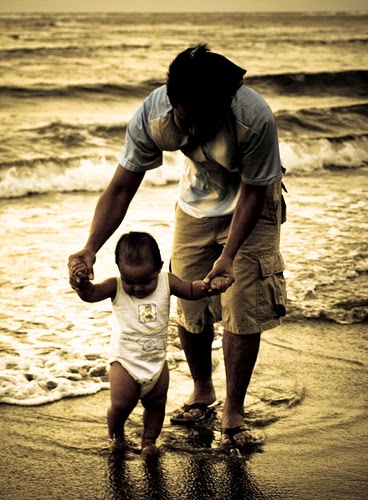
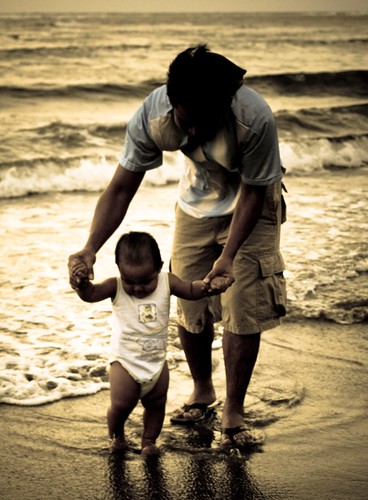
The Child's Sight

Credit: Dissolve.com
The child's wisdom is in saying
They say what they see when they see it
I am beginning to remember how 
When I don't say it when I see it
I remember it differently

I am walking with the children
They have included me
None of us eavesdrop anymore
We speak the same celestial gibberish
Our spirit ticks the same
I feel again and am part of the inside world

The child is a little inspector when it crawls
It touches and tastes the earth
Rolls and stumbles toward the object 
Zigzags like a sail
And outmaneuvers the room

I am learning the child's way
I pick up wood pieces from the ground
And see shapes into them
I notice a purple velvet bee resting on a flower
And stop to listen to its buzz

They have included me 
And though I will not be put away to rock alone
And I don't roll down the plush hills
Nor spit for luck
I am learning their way
They have given me back the bliss of my senses

~ Hy Sobiloff

Monday

the children of immigrants

Lenelle Moïse 
When I am a toddler, a child, a tween, a teen, and a young adult, I am called an ancestral soul, a ti gran moun, a little old person.

Adults study me and decide that I am wise beyond my years, mature for my age, emotionally ripe. I am told it is unusual to meet a five-ten-fifteen-year-old girl who does not slouch or mumble or speak in monosyllables.

When I do the things that come naturally to me—when I hold my spine up erect, when I wait my turn to speak, when I speak having listened, carefully, when I enunciate, when I look grown-ups in the eye—I am told I must have “been here before.”

"How do you know?" one college professor asks me after she has seen a psychologically violent play I have written at age nineteen. "How do you already know?”

In high school, I charm my teachers. They encourage me to write speeches about feminism that I recite for International Women's Day at City Hall or deliver as part of conference panels at local universities. “If you were older," they tell me, "we would probably be friends.” One of them even flirts with me.

Among my peers I exist somewhere between amicably mysterious and irrevocably dorky. The popular kids greet me in the hallways, but they never invite me to their beer-drenched parties. I will never play Spin the Bottle. I will never play Seven Minutes in Heaven. My mother tells me she is protecting me from boys, but the truth is, after I do my homework, she wants me to type up another family friend’s résumé or resignation letter. At home, I am a bridge, a cultural interpreter, a spokesperson, a trusted ally, an American who is Haitian too, but also definitely American.

The children of immigrants don't get to be children. We lose our innocence watching our parents' backs bend, break. I am an old soul because when I am young, I watch my parents' spirits get slaughtered.

In Haiti, they were middle class. Hopeful teachers. Home owners. They were black like their live-in servants. They donated clothes to the poor. They gave up everything they knew to inherit American dreams. And here, they join factory lines, wipe shit from mean old white men's behinds, scrub five-star hotel toilets for dimes above minimum wage. Here, they shuck and jive and step and fetch and play chauffeur to people who aren't as smart as they are, people who do not speak as many languages as they do. In the 1980s, they are barred from giving blood because newscasters and politicians say that AIDS comes from where they come from: Haiti, the poorest country in the Western Hemisphere, a black magic island that spawns boat people and chaos, a place of illiterate zombies, orphan beggars and brazen political corruption.

When I am a child, my childhood is a luxury my family cannot afford. Their dignity is not spared, so my innocence is not spared. They are humihated and traumatized daily, so I become a nurse to their trauma. I am told too much, so I know too much, so I am wise beyond my years.

When I am six, my mother tells me she found out she was pregnant with me at age nineteen, she “tried to kill the baby." She says "the baby," as if it isn’t me she’s talking about; as if I am not the expensive, scandalous daughter who forced my way into her world despite the abortion-inducing herbal teas she drank and her frantic leaps off of small buildings.

When I am sixteen, my father calls me on the phone to, inevitably, weep. He says, "Living in this country, I have learned not to hope for things. Only you are my hope. Only you."

So—yes, I grow up fast.

~ Lenelle Moïse

the children of immigrants

Lenelle Moïse 
When I am a toddler, a child, a tween, a teen, and a young adult, I am called an ancestral soul, a ti gran moun, a little old person.

Adults study me and decide that I am wise beyond my years, mature for my age, emotionally ripe. I am told it is unusual to meet a five-ten-fifteen-year-old girl who does not slouch or mumble or speak in monosyllables.

When I do the things that come naturally to me—when I hold my spine up erect, when I wait my turn to speak, when I speak having listened, carefully, when I enunciate, when I look grown-ups in the eye—I am told I must have “been here before.”

"How do you know?" one college professor asks me after she has seen a psychologically violent play I have written at age nineteen. "How do you already know?”

In high school, I charm my teachers. They encourage me to write speeches about feminism that I recite for International Women's Day at City Hall or deliver as part of conference panels at local universities. “If you were older," they tell me, "we would probably be friends.” One of them even flirts with me.

Among my peers I exist somewhere between amicably mysterious and irrevocably dorky. The popular kids greet me in the hallways, but they never invite me to their beer-drenched parties. I will never play Spin the Bottle. I will never play Seven Minutes in Heaven. My mother tells me she is protecting me from boys, but the truth is, after I do my homework, she wants me to type up another family friend’s résumé or resignation letter. At home, I am a bridge, a cultural interpreter, a spokesperson, a trusted ally, an American who is Haitian too, but also definitely American.

The children of immigrants don't get to be children. We lose our innocence watching our parents' backs bend, break. I am an old soul because when I am young, I watch my parents' spirits get slaughtered.

In Haiti, they were middle class. Hopeful teachers. Home owners. They were black like their live-in servants. They donated clothes to the poor. They gave up everything they knew to inherit American dreams. And here, they join factory lines, wipe shit from mean old white men's behinds, scrub five-star hotel toilets for dimes above minimum wage. Here, they shuck and jive and step and fetch and play chauffeur to people who aren't as smart as they are, people who do not speak as many languages as they do. In the 1980s, they are barred from giving blood because newscasters and politicians say that AIDS comes from where they come from: Haiti, the poorest country in the Western Hemisphere, a black magic island that spawns boat people and chaos, a place of illiterate zombies, orphan beggars and brazen political corruption.

When I am a child, my childhood is a luxury my family cannot afford. Their dignity is not spared, so my innocence is not spared. They are humihated and traumatized daily, so I become a nurse to their trauma. I am told too much, so I know too much, so I am wise beyond my years.

When I am six, my mother tells me she found out she was pregnant with me at age nineteen, she “tried to kill the baby." She says "the baby," as if it isn’t me she’s talking about; as if I am not the expensive, scandalous daughter who forced my way into her world despite the abortion-inducing herbal teas she drank and her frantic leaps off of small buildings.

When I am sixteen, my father calls me on the phone to, inevitably, weep. He says, "Living in this country, I have learned not to hope for things. Only you are my hope. Only you."

So—yes, I grow up fast.

~ Lenelle Moïse

Quote: Tenacity

Source: Flickr 
Have you ever watched a child learning to walk?
Before this week, I never had, but there's a certain grace to it. Well, if not grace, then tenacity. Fall down nine times—get up ten. And the tenth time you get where you’re going, you don’t stop, not for obstacles, not for other people telling you to stop. You don't listen to anything but that inner voice until you arrive where you want to be.

~ Ann Aguirre

Quote: Tenacity

Source: Flickr 
Have you ever watched a child learning to walk?
Before this week, I never had, but there's a certain grace to it. Well, if not grace, then tenacity. Fall down nine times—get up ten. And the tenth time you get where you’re going, you don’t stop, not for obstacles, not for other people telling you to stop. You don't listen to anything but that inner voice until you arrive where you want to be.

~ Ann Aguirre

Sunday

A Prayer

Source: Unknown/Favim.com
I want to be ever a child
I want to feel an eternal friendship
for the raindrops, the flowers,
the insects, the snowflakes.
I want to be keenly interested in everything,
with mind and muscle ever alert,
forgetting my troubles in the next moment.
The stars and the sea, the ponds and the trees,
the birds and the animals, are my comrades.
Though my muscles may stiffen, though my skin may
wrinkle, may I never find myself yawning
at life.

~Toyohiko Kagawa

A Prayer

Source: Unknown/Favim.com
I want to be ever a child
I want to feel an eternal friendship
for the raindrops, the flowers,
the insects, the snowflakes.
I want to be keenly interested in everything,
with mind and muscle ever alert,
forgetting my troubles in the next moment.
The stars and the sea, the ponds and the trees,
the birds and the animals, are my comrades.
Though my muscles may stiffen, though my skin may
wrinkle, may I never find myself yawning
at life.

~Toyohiko Kagawa