Showing posts with label Human. Show all posts

Friday

Acceptance

Source: Facebook/Favim
No more knuckling under, groaning, moaning: one gets used to pain. This hurts. Not being perfect hurts. Having to bother about work in order to eat and have a house hurts. So what. It’s about time. This is the month which ends a quarter of a century for me, lived under the shadow of fear: fear that I would fall short of some abstract perfection: I have often fought, fought and won, not perfection, but an acceptance of myself as having a right to live on my own human, fallible terms.

~ Sylvia Plath

Acceptance

Source: Facebook/Favim
No more knuckling under, groaning, moaning: one gets used to pain. This hurts. Not being perfect hurts. Having to bother about work in order to eat and have a house hurts. So what. It’s about time. This is the month which ends a quarter of a century for me, lived under the shadow of fear: fear that I would fall short of some abstract perfection: I have often fought, fought and won, not perfection, but an acceptance of myself as having a right to live on my own human, fallible terms.

~ Sylvia Plath

Tuesday

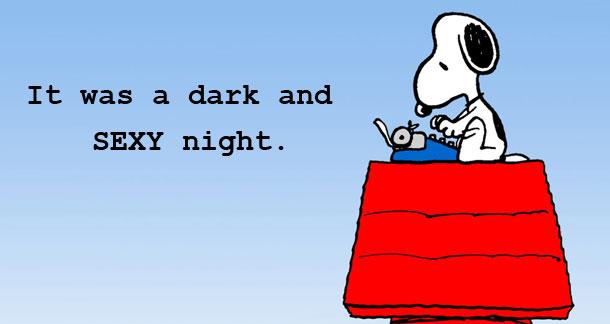
Quote: Writing about sex

Source: LitReactor
In actual word count, if the literary novels in my bookcase accurately represent human experience, it looks as if people spend roughly half their time in intelligent dialogue about the meaning of their lives, and 1 percent of it practicing or contemplating coition.
Excuse me, but I don’t think so.
Why should literary authors shy away from something so important? Nobody else does. If we calibrated human experience on the basis of television, magazine covers and billboards, we would have to conclude that humans devote more time to copulation than to sleeping, eating and accessorizing the hot new summer look, combined. (Possibly even more than shooting one another with firearms, though that’s a tough call.) Filmmakers don’t risk being taken less seriously for including sexual content; in fact, they may risk it if they don’t.
But serious literature seems to be looking the other way, ready to take on anything else, with impunity. Myself, I’ve written about every awful thing from the death of a child to the morality of political assassination, and I’ve never felt fainthearted before. What is it about describing acts of love that makes me go pale? There is, of course, the claim that women who make a public show of being acquainted with sexuality are expressing deviance, but that’s also said about women who make a show of knowing anything, and I can’t imagine being daunted by such nonsense.
For decent folk of any gender, the official and legal position of our culture is that sex takes place in private, and that’s surely part of the problem. Private things—newfound love, family disagreements and spiritual faith, to name a few—can quickly become banal or irritating when moved into the public arena. But new love, family squabbles and spirituality are rich ground for literature when they’re handled with care. Writers don’t avoid them on grounds of privacy, but rather take it as duty to draw insights from personal things and render them universal. Nothing could be more secret, after all, than the inside of another person’s mind, and that is just where a novel takes us, usually from Page 1. No subject is too private for good fiction if it can be made beautiful and enlightening.
That may be the rub right there. Making it beautiful is no small trick. The language of coition has been stolen, or rather, I think, it has been divvied up like chips in a poker game among pornography, consumerism and the medical profession. None of these players are concerned with aesthetics, so the linguistic chips have become unpretty by association. “Vagina” is fatally paired with “speculum.” Any word you can name for the male sex organ or its, um, movement seems to be the property of Larry Flynt. Even a perfectly serviceable word like “nut,” when uttered by an adult, causes paroxysms in sixth-grade boys.
My word processing program’s thesaurus has washed its hands of the matter: it eschews any word remotely associated with making love. “Coitus,” for example, claims to be NOT FOUND, and the program coyly suggests as the nearest alternative “coincide with?” It also pleads ignorant on “penis” and suggests “pen friend.” A writer in work-avoidance mode could amuse herself all day.
I realize linguistic aesthetics may not be Microsoft’s concern here; more likely it’s mothers. Roget’s does much better, reinforcing my conviction that the book is mightier (or at least braver) than the computer. My St. Martin’s Roget’s Thesaurus obligingly offers up 15 synonyms for coition—though some are dubious, like “couplement”—and an impressive 28 descriptors for genitalia, though again some of these are obscure. In a scene where lingam meets yoni, I’m not even sure who I’m rooting for.
Nevertheless, the language is ours for the taking. Fiction writers have found elegant ways to describe life on other planets, or in a rabbit warren, or an elephant tribe, inventing the language they needed to navigate passages previously uncharted by our tongue. We don’t normally call off the game on account of linguistic handicaps. When it comes to the couplement of yoni, I think the real handicap is a cultural one.
We live in a strange land where marketers can display teenage models in the receptive lordotic posture (look it up) to sell jeans or liquor, but the basics of human procreation can’t be discussed in a middle-school science class without sparking parental ire. The same is true for evolution, incidentally, and I think the reason is the same: our tradition is to deny, for all we’re worth, that we’re in any way connected with the rest of life on earth. We don’t come from it, we’re not part of it, we own it.
It is deeply threatening to our ideology, at the corporate and theological levels, to admit we’re constrained by the laws of biology. Sex is the ultimate animal necessity. We can’t get rid of it. The harder we try to deny it official status, the more it asserts itself in banal, embarrassing ways. And so here we are, modern Americans with our heads soaked in frank sexual imagery and our feet planted in our Puritanical heritage, and any novelist with something to say about procreation or the lordotic posture has to nnegotiate that territory. Great sex is more rare in art than in life because it’s harder to do.

~ Barbara Kingsolver

Quote: Writing about sex

Source: LitReactor
In actual word count, if the literary novels in my bookcase accurately represent human experience, it looks as if people spend roughly half their time in intelligent dialogue about the meaning of their lives, and 1 percent of it practicing or contemplating coition.
Excuse me, but I don’t think so.
Why should literary authors shy away from something so important? Nobody else does. If we calibrated human experience on the basis of television, magazine covers and billboards, we would have to conclude that humans devote more time to copulation than to sleeping, eating and accessorizing the hot new summer look, combined. (Possibly even more than shooting one another with firearms, though that’s a tough call.) Filmmakers don’t risk being taken less seriously for including sexual content; in fact, they may risk it if they don’t.
But serious literature seems to be looking the other way, ready to take on anything else, with impunity. Myself, I’ve written about every awful thing from the death of a child to the morality of political assassination, and I’ve never felt fainthearted before. What is it about describing acts of love that makes me go pale? There is, of course, the claim that women who make a public show of being acquainted with sexuality are expressing deviance, but that’s also said about women who make a show of knowing anything, and I can’t imagine being daunted by such nonsense.
For decent folk of any gender, the official and legal position of our culture is that sex takes place in private, and that’s surely part of the problem. Private things—newfound love, family disagreements and spiritual faith, to name a few—can quickly become banal or irritating when moved into the public arena. But new love, family squabbles and spirituality are rich ground for literature when they’re handled with care. Writers don’t avoid them on grounds of privacy, but rather take it as duty to draw insights from personal things and render them universal. Nothing could be more secret, after all, than the inside of another person’s mind, and that is just where a novel takes us, usually from Page 1. No subject is too private for good fiction if it can be made beautiful and enlightening.
That may be the rub right there. Making it beautiful is no small trick. The language of coition has been stolen, or rather, I think, it has been divvied up like chips in a poker game among pornography, consumerism and the medical profession. None of these players are concerned with aesthetics, so the linguistic chips have become unpretty by association. “Vagina” is fatally paired with “speculum.” Any word you can name for the male sex organ or its, um, movement seems to be the property of Larry Flynt. Even a perfectly serviceable word like “nut,” when uttered by an adult, causes paroxysms in sixth-grade boys.
My word processing program’s thesaurus has washed its hands of the matter: it eschews any word remotely associated with making love. “Coitus,” for example, claims to be NOT FOUND, and the program coyly suggests as the nearest alternative “coincide with?” It also pleads ignorant on “penis” and suggests “pen friend.” A writer in work-avoidance mode could amuse herself all day.
I realize linguistic aesthetics may not be Microsoft’s concern here; more likely it’s mothers. Roget’s does much better, reinforcing my conviction that the book is mightier (or at least braver) than the computer. My St. Martin’s Roget’s Thesaurus obligingly offers up 15 synonyms for coition—though some are dubious, like “couplement”—and an impressive 28 descriptors for genitalia, though again some of these are obscure. In a scene where lingam meets yoni, I’m not even sure who I’m rooting for.
Nevertheless, the language is ours for the taking. Fiction writers have found elegant ways to describe life on other planets, or in a rabbit warren, or an elephant tribe, inventing the language they needed to navigate passages previously uncharted by our tongue. We don’t normally call off the game on account of linguistic handicaps. When it comes to the couplement of yoni, I think the real handicap is a cultural one.
We live in a strange land where marketers can display teenage models in the receptive lordotic posture (look it up) to sell jeans or liquor, but the basics of human procreation can’t be discussed in a middle-school science class without sparking parental ire. The same is true for evolution, incidentally, and I think the reason is the same: our tradition is to deny, for all we’re worth, that we’re in any way connected with the rest of life on earth. We don’t come from it, we’re not part of it, we own it.
It is deeply threatening to our ideology, at the corporate and theological levels, to admit we’re constrained by the laws of biology. Sex is the ultimate animal necessity. We can’t get rid of it. The harder we try to deny it official status, the more it asserts itself in banal, embarrassing ways. And so here we are, modern Americans with our heads soaked in frank sexual imagery and our feet planted in our Puritanical heritage, and any novelist with something to say about procreation or the lordotic posture has to nnegotiate that territory. Great sex is more rare in art than in life because it’s harder to do.

~ Barbara Kingsolver

Saturday

Quote on not taking myself seriously

Source: Facebook/Favim
What stops me from taking myself seriously, even though I am essentially a serious person, is that I find myself extremely ridiculous, not in the sense of the small-scale ridiculousness of slap-stick comedy, but rather in the sense of ridiculousness that seems intrinsic to human life and that manifests itself in the simplest actions and the most extraordinary gestures.

~ Gustave Flaubert

Quote on not taking myself seriously

Source: Facebook/Favim
What stops me from taking myself seriously, even though I am essentially a serious person, is that I find myself extremely ridiculous, not in the sense of the small-scale ridiculousness of slap-stick comedy, but rather in the sense of ridiculousness that seems intrinsic to human life and that manifests itself in the simplest actions and the most extraordinary gestures.

~ Gustave Flaubert

Monday

Why I Love What Breaks Down

Photo credit: The_Willow_Tree from morguefile.com
for Dave Smith

I've broken most things a man can and survived,
though I move with the rigid steps of some older man
who is not me; a few scars I can show off,
a few I cannot, though I claim to love them all
the same. A purple heart for the starburst
on the bony knob of my ankle where bone
and ligament saw air for the first time.
What in this world isn't a narrative? We all keep
a childhood fondness for picking scabs;
that's why, after eating the cooling asphalt
of a rain glassy road, I fixed that bike
instead of selling it for scrap. There's a Royal
portable typewriter behind me, on the rotten sill
of a window with cracked panes, dried out caulk.
I'll get around to fixing all of it soon,
and that could be why I love what breaks down,
because it gives me something to do.
Part of being human is to specialize in repair,
and pray that when called upon, you are able
to raise the hood of a rusted Chevrolet.
see frayed belts thrown about the machine,
and know the difference between what is broken,
what can be fixed, and what was never worth the trouble.

~ Steve Kistulentz

Why I Love What Breaks Down

Photo credit: The_Willow_Tree from morguefile.com
for Dave Smith

I've broken most things a man can and survived,
though I move with the rigid steps of some older man
who is not me; a few scars I can show off,
a few I cannot, though I claim to love them all
the same. A purple heart for the starburst
on the bony knob of my ankle where bone
and ligament saw air for the first time.
What in this world isn't a narrative? We all keep
a childhood fondness for picking scabs;
that's why, after eating the cooling asphalt
of a rain glassy road, I fixed that bike
instead of selling it for scrap. There's a Royal
portable typewriter behind me, on the rotten sill
of a window with cracked panes, dried out caulk.
I'll get around to fixing all of it soon,
and that could be why I love what breaks down,
because it gives me something to do.
Part of being human is to specialize in repair,
and pray that when called upon, you are able
to raise the hood of a rusted Chevrolet.
see frayed belts thrown about the machine,
and know the difference between what is broken,
what can be fixed, and what was never worth the trouble.

~ Steve Kistulentz

Sunday

Quote on being human

Photo credit: taliesin from morguefile.com
This is what it is to be human: to see the essential existential futility of all action, all striving -- and to act, to strive. This is what it is to be human: to reach forever beyond your grasp. This is what it is to be human: to live forever or die trying. This is what it is to be human: to perpetually ask the unanswerable questions, in the hope that the asking of them will somehow hasten the day when they will be answered. This is what it is to be human: to strive in the face of the certainty of failure. This is what it is to be human: to persist.

~ Spider and Jeanne Robinson

Quote on being human

Photo credit: taliesin from morguefile.com
This is what it is to be human: to see the essential existential futility of all action, all striving -- and to act, to strive. This is what it is to be human: to reach forever beyond your grasp. This is what it is to be human: to live forever or die trying. This is what it is to be human: to perpetually ask the unanswerable questions, in the hope that the asking of them will somehow hasten the day when they will be answered. This is what it is to be human: to strive in the face of the certainty of failure. This is what it is to be human: to persist.

~ Spider and Jeanne Robinson

Saturday

Quote on Cats

Source: Elin Pendleton
One of the many ways in which cats are superior to humans is their mastery of time. By making no attempt to dissect years into months, days into hours and minutes into seconds, cats avoid much misery. Free from the slavery of measuring every moment, worrying whether they are late or early, young or old, or if Christmas is six weeks away, felines appreciate the present in all its multidimensional glory. They never worry about endings or beginnings. From their paradoxical viewpoint an ending is often a beginning. The joy of basking on a window ledge can seem eternal, though if measured in human time it's diminished to a paltry eighteen minutes.
If humans could program themselves to forget time, they would savor a string of pleasures and possibilities. Regrets about the past would dissolve, alongside anxieties for the future. We'd notice the color of the sky and be liberated to seize the wonder of being alive in this moment. If we could be more like cats our lives would seem eternal.

~ Helen Brown

Quote on Cats

Source: Elin Pendleton
One of the many ways in which cats are superior to humans is their mastery of time. By making no attempt to dissect years into months, days into hours and minutes into seconds, cats avoid much misery. Free from the slavery of measuring every moment, worrying whether they are late or early, young or old, or if Christmas is six weeks away, felines appreciate the present in all its multidimensional glory. They never worry about endings or beginnings. From their paradoxical viewpoint an ending is often a beginning. The joy of basking on a window ledge can seem eternal, though if measured in human time it's diminished to a paltry eighteen minutes.
If humans could program themselves to forget time, they would savor a string of pleasures and possibilities. Regrets about the past would dissolve, alongside anxieties for the future. We'd notice the color of the sky and be liberated to seize the wonder of being alive in this moment. If we could be more like cats our lives would seem eternal.

~ Helen Brown

Quote on saints

Credit: Mukesh Srivastava
A saint is someone who has achieved a remote human possibility. It is impossible to say what that possibility is. I think it has something to do with the energy of love. Contact with this energy results in the exercise of a kind of balance in the chaos of existence. A saint does not dissolve the chaos; if he did the world would have changed long ago. I do not think that a saint dissolves the chaos even for himself, for there is something arrogant and warlike in the notion of a man setting the universe in order. It is a kind of balance that is his glory. He rides the drifts like an escaped ski. His course is a caress of the hill. His track is a drawing of the snow in a moment of its particular arrangement with wind and rock. Something in him so loves the world that he gives himself to the laws of gravity and chance. Far from flying with the angels, he traces with the fidelity of a seismograph needle the state of the solid bloody landscape. His house is dangerous and finite, but he is at home in the world. He can love the shapes of human beings, the fine and twisted shapes of the heart. It is good to have among us such men, such balancing monsters of love. It makes me think that the numbers in the bag actually correspond to the numbers on the raffles we have bought so dearly, and so the prize is not an illusion.

~ Leonard Cohen

Quote on saints

Credit: Mukesh Srivastava
A saint is someone who has achieved a remote human possibility. It is impossible to say what that possibility is. I think it has something to do with the energy of love. Contact with this energy results in the exercise of a kind of balance in the chaos of existence. A saint does not dissolve the chaos; if he did the world would have changed long ago. I do not think that a saint dissolves the chaos even for himself, for there is something arrogant and warlike in the notion of a man setting the universe in order. It is a kind of balance that is his glory. He rides the drifts like an escaped ski. His course is a caress of the hill. His track is a drawing of the snow in a moment of its particular arrangement with wind and rock. Something in him so loves the world that he gives himself to the laws of gravity and chance. Far from flying with the angels, he traces with the fidelity of a seismograph needle the state of the solid bloody landscape. His house is dangerous and finite, but he is at home in the world. He can love the shapes of human beings, the fine and twisted shapes of the heart. It is good to have among us such men, such balancing monsters of love. It makes me think that the numbers in the bag actually correspond to the numbers on the raffles we have bought so dearly, and so the prize is not an illusion.

~ Leonard Cohen

Sunday

Quote on the human face


Photo credit: chilombiano from morguefile.com
The human face is the subtle yet visual autobiography of each person. Regardless of how concealed or hidden the inner story of your life is, you can never successfully hide from the world while you have a face. If we knew how to read the faces of others, we would be able to decipher the mysteries of their life stories. The face always reveals the soul; it is where the divinity of the inner life finds an echo and image. When you behold someone’s face, you are gazing deeply into that person’s life …
Your face is the icon of your life. In the human face, a life looks out at the world and also looks in on itself. It is frightening to behold a face in which bitterness and resentment have lodged. When a person’s life has been bleak, much of its negativity can remain unhealed. Since the negativity is left untransfigured, the bleakness lodges in the face. The face, instead of being a warm presence, has hardened to become a mask. One of the oldest words for person is the Greek word prosopon; and prosopon originally meant the mask that actors wore in a Greek chorus. When bitterness, anger, or resentment are left untransfigured, the face becomes a mask. Yet one also encounters the opposite, namely, the beautiful presence of an old face deeply lined and inscribed by time and experience that has retained a lovely innocence. Even though life may have moved wearily and painfully through such a person, they have still managed not to let it corrode their soul. In such a face a lovely luminosity shines out into the world. It casts a tender light that radiates a sense of holiness and wholesomeness.
The face always reveals who you are, and what life has done to you. Yet it is difficult for you to see the shape of your own life; your life is too near you. Others can decipher much of your mystery from your face. Portrait artists admit that it is exceptionally difficult to render the human face. Traditionally, the eyes are said to be the windows of the soul. The mouth is also difficult to render in the individual portrait. In some strange way the line of the mouth seems to betray the contour of the life; a tight mouth often suggests meanness of spirit. There is a strange symmetry in the way the soul writes the story of its life in the contours of the face.

~ John O’Donohue

Quote on the human face


Photo credit: chilombiano from morguefile.com
The human face is the subtle yet visual autobiography of each person. Regardless of how concealed or hidden the inner story of your life is, you can never successfully hide from the world while you have a face. If we knew how to read the faces of others, we would be able to decipher the mysteries of their life stories. The face always reveals the soul; it is where the divinity of the inner life finds an echo and image. When you behold someone’s face, you are gazing deeply into that person’s life …
Your face is the icon of your life. In the human face, a life looks out at the world and also looks in on itself. It is frightening to behold a face in which bitterness and resentment have lodged. When a person’s life has been bleak, much of its negativity can remain unhealed. Since the negativity is left untransfigured, the bleakness lodges in the face. The face, instead of being a warm presence, has hardened to become a mask. One of the oldest words for person is the Greek word prosopon; and prosopon originally meant the mask that actors wore in a Greek chorus. When bitterness, anger, or resentment are left untransfigured, the face becomes a mask. Yet one also encounters the opposite, namely, the beautiful presence of an old face deeply lined and inscribed by time and experience that has retained a lovely innocence. Even though life may have moved wearily and painfully through such a person, they have still managed not to let it corrode their soul. In such a face a lovely luminosity shines out into the world. It casts a tender light that radiates a sense of holiness and wholesomeness.
The face always reveals who you are, and what life has done to you. Yet it is difficult for you to see the shape of your own life; your life is too near you. Others can decipher much of your mystery from your face. Portrait artists admit that it is exceptionally difficult to render the human face. Traditionally, the eyes are said to be the windows of the soul. The mouth is also difficult to render in the individual portrait. In some strange way the line of the mouth seems to betray the contour of the life; a tight mouth often suggests meanness of spirit. There is a strange symmetry in the way the soul writes the story of its life in the contours of the face.

~ John O’Donohue

Tuesday

In Memory of Anyone Unknown to Me

Source: Tumblr/Favim
At this particular time I have no one
Particular person to grieve for, though there must
Be many, many unknown ones going to dust
Slowly, not remembered for what they have done
Or left undone. For these, then, I will grieve
Being impartial, unable to deceive.

How they lived, or died, is quite unknown,
And, by that fact gives my grief purity--
An important person quite apart from me
Or one obscure who drifted down alone.
Both or all I remember, have a place.
For these I never encountered face to face.

Sentiment will creep in. I cast it out
Wishing to give these classical repose,
No epitaph, no poppy and no rose
From me, and certainly no wish to learn about
The way they lived or died. In earth or fire
They are gone. Simply because they were human, I admire.

~ Elizabeth Jennings
_________________________________________

Memory is a complicated thing, a relative to truth, but not its twin. 

~ Barbara Kingsolver


In Memory of Anyone Unknown to Me

Source: Tumblr/Favim
At this particular time I have no one
Particular person to grieve for, though there must
Be many, many unknown ones going to dust
Slowly, not remembered for what they have done
Or left undone. For these, then, I will grieve
Being impartial, unable to deceive.

How they lived, or died, is quite unknown,
And, by that fact gives my grief purity--
An important person quite apart from me
Or one obscure who drifted down alone.
Both or all I remember, have a place.
For these I never encountered face to face.

Sentiment will creep in. I cast it out
Wishing to give these classical repose,
No epitaph, no poppy and no rose
From me, and certainly no wish to learn about
The way they lived or died. In earth or fire
They are gone. Simply because they were human, I admire.

~ Elizabeth Jennings
_________________________________________

Memory is a complicated thing, a relative to truth, but not its twin. 

~ Barbara Kingsolver


Quote on joining of souls

Source: TinyPic
What greater thing is there for two human souls than to feel that they are joined... to strengthen each other... to be at one with each other in silent unspeakable memories. ~ George Eliot

Quote on joining of souls

Source: TinyPic
What greater thing is there for two human souls than to feel that they are joined... to strengthen each other... to be at one with each other in silent unspeakable memories. ~ George Eliot